How We Cracked The AEO Mystery: Dariaan’s Case Study On Ranking First In Answer Engines
You probably don’t expect a fashion startup accelerator to write an answer engine optimization case study.
But here you are, and here we are.
You might know Dariaan as the place that helps fashion, lifestyle and D2C brands get their strategy, retail, and growth act together. What you may not know is that at some point, almost by accident, we started seeing something very strange on our screens:
For most of the “explain this to me” queries around fashion accelerators, phygital, slow fashion growth and startup scaling, we kept showing up as the answer. Not just as “one of the results”, but as the actual box Google or an AI tool was quoting.
That was the moment we realised we had quietly cracked a big part of the AEO puzzle.
This is the story of how that happened, told as if we’re sitting across the table from you, walking you through the exact way we think about Dariaan answer engine optimization today.
Why AEO Suddenly Mattered For A Fashion Startup Accelerator
If you are a founder, you already know this: you don’t “browse” anymore, you ask questions.
You type or say things like:
- “Do fashion startup accelerators really help with funding?”
- “What does a fashion accelerator do?”
- “Is an accelerator or incubator better for my D2C brand?”
And most of the time, you don’t scroll all the way down. You read the first clear answer that feels trustworthy, and that answer shapes your next move.
As a fashion startup accelerator, it hit us one day that we were competing inside those answers, not just on the list of ten blue links. AI search, AI overviews, snippets, “People Also Ask” – they were all becoming the new front door.
So we made a decision: if answer engines are where your questions land, we want Dariaan to be the voice that replies.
That is where AEO for startups became real for us. Not as a buzzword, but as part of how we serve you better.
What We Mean By AEO (Answer Engine Optimization) At Dariaan
From Search Engines To Answer Engines
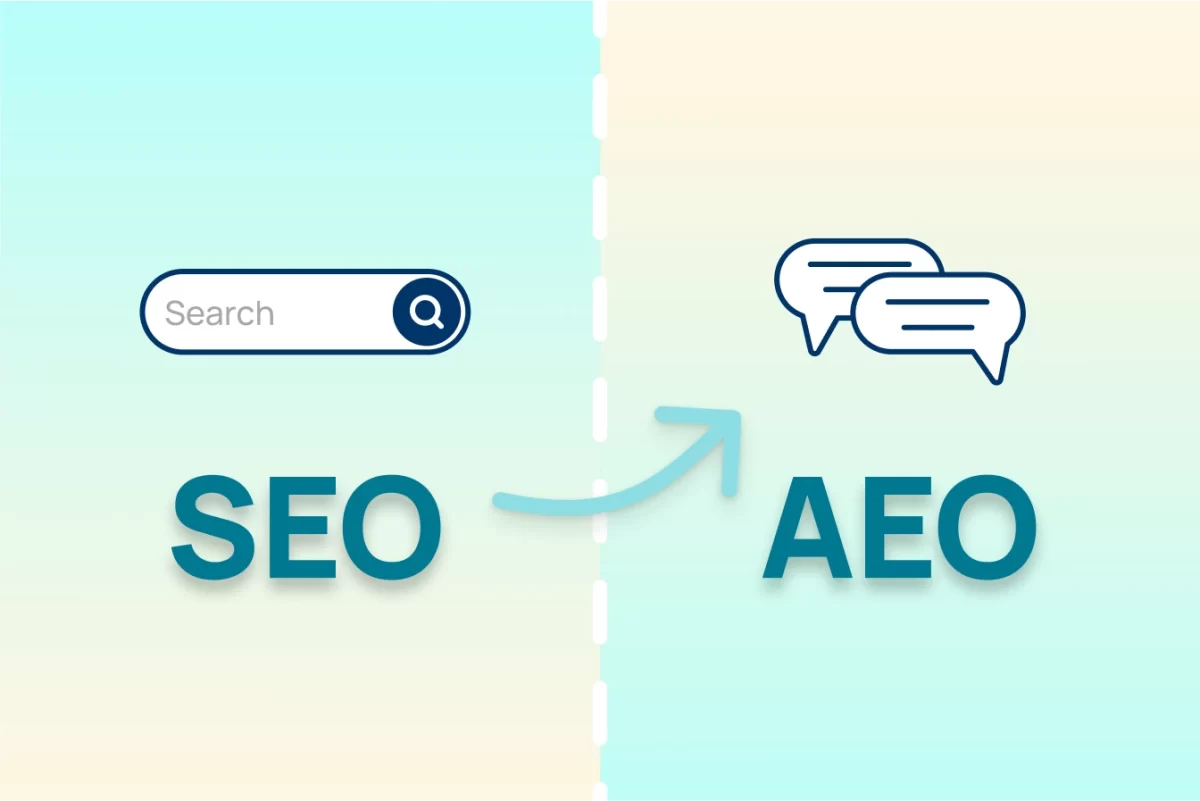
Classic SEO asks: “How do we rank this page higher?”
Our AEO mindset asks: “How do we make this page so clear, so structured, and so credible that answer engines want to quote it?”
When we say AEO, we mean shaping our content so that:
- It can be lifted cleanly as a direct answer.
- It makes sense on its own, even outside our site.
- It sounds like an expert talking, not a keyword-stuffed template.
Google’s AI Overviews, featured snippets, voice assistants, AI tools – they’re all answer engines now. They scan a million words and then pick a few lines to represent “the answer”. Our job at Dariaan is to make sure those few lines are ours as often as possible.
The Fashion Founder’s Reality In AI Search
Imagine you, as a founder, asking your phone:
“Do I really need a fashion accelerator?”
If the answer you see starts with our words – our explanation of how accelerators work, who they are right for, and who they are not for – then before you even click, you already know us, and you already feel that we “get it”.
That’s the entire point of our AEO strategy for AI search: being the one who explains, calmly and clearly, at the exact moment you’re trying to understand the next step for your brand.
The Starting Point – How We Realised We Were Onto Something
We didn’t start with a fancy AEO playbook. We started with frustration.
We were tired of shallow, one-size-fits-all articles about accelerators. So we wrote our content the way we talk to founders on calls – detailed, honest, and sometimes uncomfortably direct.
Then something unexpected happened.
We began to notice that when we Googled very specific questions about fashion accelerators, our own articles were showing up inside featured snippets and answer boxes. We saw our definitions paraphrased in AI tools. Search Console started showing more impressions for question-style queries where we weren’t just “on the page”, we were the snippet.
That is when we realised: without naming it, we had started doing answer engine optimization.
So we sat down, reverse-engineered what was working, and turned it into a deliberate system.
Step 1 – We Reframed Our Content Around Real Founder Questions
You can’t win AEO if you don’t know which questions you want to own.
So we went back to the basics: calls, WhatsApp chats, email threads, cohort discussions. Anywhere a founder had vented, worried or asked something twice, we took notes.
Questions like:
- “What exactly does a fashion accelerator do beyond funding?”
- “How do I know if my brand is ready for an accelerator?”
- “Accelerator vs agency vs investor – who do I actually need first?”
- “Do slow fashion labels even need accelerators, or will they lose their soul?”
Every strong question became a potential article.
Then, for each content piece, we forced ourselves to do something very simple that changed everything: answer the core question clearly in the first 80-100 words.
Not flowery intros. Not three paragraphs of context. A direct, human sentence that could be lifted and used as the answer.
You still get the richer story if you scroll. But if an answer engine is scanning our page looking for “one clear explanation”, it finds it fast.
Step 2 – We Structured Pages For Machines Without Ruining The Human Flow
We didn’t want our site to read like a technical manual. We still wanted that “journalist meets operator” voice. So we made changes that feel subtle to a human, but are huge for an answer engine.
We did things like:
- Turning vague subheadings into actual questions:
- Instead of “Our Approach”, we’d write “How Does A Fashion Accelerator Actually Help A Brand?”
- Breaking big blocks into snackable, quotable units:
- Lists for pros/cons, steps, criteria.
- Short paragraphs that make sense on their own.
- Adding FAQ sections at the bottom of key pages where each question had one crisp, self-contained answer.
On the technical side, we made sure our headings followed a clean hierarchy, our HTML wasn’t hiding the main content under layers of clutter, and our FAQ sections were marked properly so machines could see, “yes, this is a Q, this is its A”.
The result? You can read a Dariaan blog top to bottom like a story, but if you skim or if an answer engine is skimming for you, the important bits still stand out.
Step 3 – We Treated AEO As A Trust Game, Not A Trick
There is a version of AEO where you just chase snippets. That never interested us.
We care more about what happens after you read the answer box.
If an answer engine puts our words in front of you and they feel generic or salesy, your trust drops. If those words feel honest, slightly uncomfortable, and grounded in real work, your trust rises.
So we decided that for Dariaan, AEO would always sit on top of three non-negotiables:
- We only write what we actually do.
If we say “this is how accelerators help you with funding” or “this is when you should not join a program”, it’s based on real decisions we’ve made with brands, not content brainstorms. - We use case energy, not theory energy.
We never name brands without permission, but we constantly draw from real scenarios: early-stage labels stuck in pricing, D2C brands with strong online but weak retail, slow fashion founders afraid of scaling and losing their ethics. - We say no where it matters.
Some founders are not ready for accelerators yet. Some need a different partner. We say that, upfront, in our content. Answer engines can sense when an article is trying to “own everything” versus when it’s trying to guide the right people.
We made peace with something early: AEO is not a magic trick; it amplifies whatever you actually are. If you are shallow, it amplifies that. If you are useful, it amplifies that instead.
Step 4 – Off-Site Signals That Helped Our AEO Rankings
Inside the website, we could control structure, clarity and depth. Outside the website, something else started helping us silently: signals of authority.
We didn’t chase off-site AEO in a forced way. We simply did what felt right for our space:
- We wrote long, opinionated breakdowns on LinkedIn about fashion funding, retail, slow fashion economics and phygital.
- We shared our frameworks in founder communities, sometimes as live sessions, sometimes as detailed posts.
- We answered questions honestly in DMs, and some of those answers grew into public content later.
Over time, people started referencing Dariaan when they spoke about fashion accelerators and D2C growth. Some are linked to our articles. Some quoted our way of framing problems.
From an answer engine’s point of view, this tells a simple story:
“These people don’t just rank. People actually listen to them.”
And when machines see that, they are more comfortable pulling you in as the voice that answers related queries.
The Results – Where We Started Ranking First In AEO Searches
We didn’t wake up one day at number one and throw a party. It was more gradual and, honestly, more satisfying than that.
We began to notice patterns like:
- When we typed “what does a fashion startup accelerator do”, we kept seeing our explanation inside the highlighted box.
- When we searched questions around “should I join a fashion accelerator”, our language showed up again, distilled or paraphrased.
- When we used different AI tools and asked, “How do fashion accelerators help D2C brands?”, Dariaan content often appeared in the references or in the way the answer was structured.
Put simply, in a lot of our tracked answer-style queries, we weren’t just on page one – we were the answer itself.
What changed for us:
- Leads started mentioning, “I first saw your answer in Google” or “I read your breakdown when I asked my phone about accelerators.”
- Sales calls got shorter and sharper because people already understood the basics; we could skip straight to whether we were a good mutual fit.
- Inside the team, AEO stopped being a mystery. It became a natural by-product of writing content that truly tries to help one specific founder on the other end.
We still do classic SEO work, of course. But the moment we saw this, we knew one thing: we never wanted to go back to writing only for rankings. We wanted to keep writing for answers.
Lessons For Other Fashion And D2C Brands Trying To Win AEO
If you’re a founder or marketer reading this, here’s what we would tell you directly.
Start With Your Real Questions, Not With Keywords
Forget tools for a moment. Sit with your sales chats, emails, DMs and support tickets. Your best AEO opportunities are hiding there:
- “Is this fabric worth the price?”
- “What is slow fashion really?”
- “Why is your brand different from every other D2C label?”
Answer those properly, publicly, on your own site. That is AEO for startups at its purest.
Answer Clearly, Then Tell The Story
For every key piece of content:
- Give a direct, one-para answer near the top.
- Then go wild with explanations, analogies, examples, visuals.
This way, an answer engine can lift the short bit, and a human like you can enjoy the full context.
Treat AEO As A Long-Term Authority Game
Don’t chase one featured snippet and declare victory.
Think in clusters:
- A cluster around your fabric and sourcing philosophy.
- A cluster around fit, sizing and returns.
- A cluster around how your category actually works (jewellery, footwear, couture, whatever your playground is).
If a fashion accelerator like Dariaan can own its question space against far bigger, more generic players, your brand can absolutely do the same in your niche.
Quick FAQ On AEO And Dariaan’s Approach
1) Is AEO Replacing SEO For Us At Dariaan?
No. AEO sits on top of good SEO, it doesn’t replace it. If your pages are slow, broken, thin, or impossible to crawl, no answer engine will pick them, no matter how clever your wording is.
2) Do You Need Heavy Tech To Win Answer Engine Optimization?
You need enough tech to make things clean: proper headings, fast pages, basic schema, sensible internal linking. But the real work happens in your brain and your conversations with customers. Clarity first, markup second.
3) Can A Non-SEO Brand Really Compete With Agencies On AEO?
Absolutely. In fact, this is where you can win. Agencies often have technique, but you have lived experience in your niche. When you combine that with an AEO mindset, you become the best possible teacher in your category – and answer engines love good teachers.
Final Thoughts – Why A Fashion Accelerator Cares About Answer Engines
For us at Dariaan, this was never just about showing off that “we rank number one for this” or “we’ve cracked some secret”.
It was about something much simpler and more human: when you, as a founder, sit down tired at 1 AM and type a raw question into a search bar, we want the words that meet you there to be honest, useful and on your side.
If that means answer engines pick us up more often, great. If that means we keep writing clearer, sharper, more empathetic content, even better.
We cracked a part of the AEO mystery by treating it as a trust exercise, not a trick. And if you want that same thinking applied to your brand – whether it’s content, discovery, or how you show up in AI search – you now know exactly how we think about it, from the inside.
Also Read: How Micro-Influencer Collaborations Can Build Early Brand Trust Without Huge Ad Budgets