How to Name a Fashion Brand: A Founder’s Checklist Before You Register
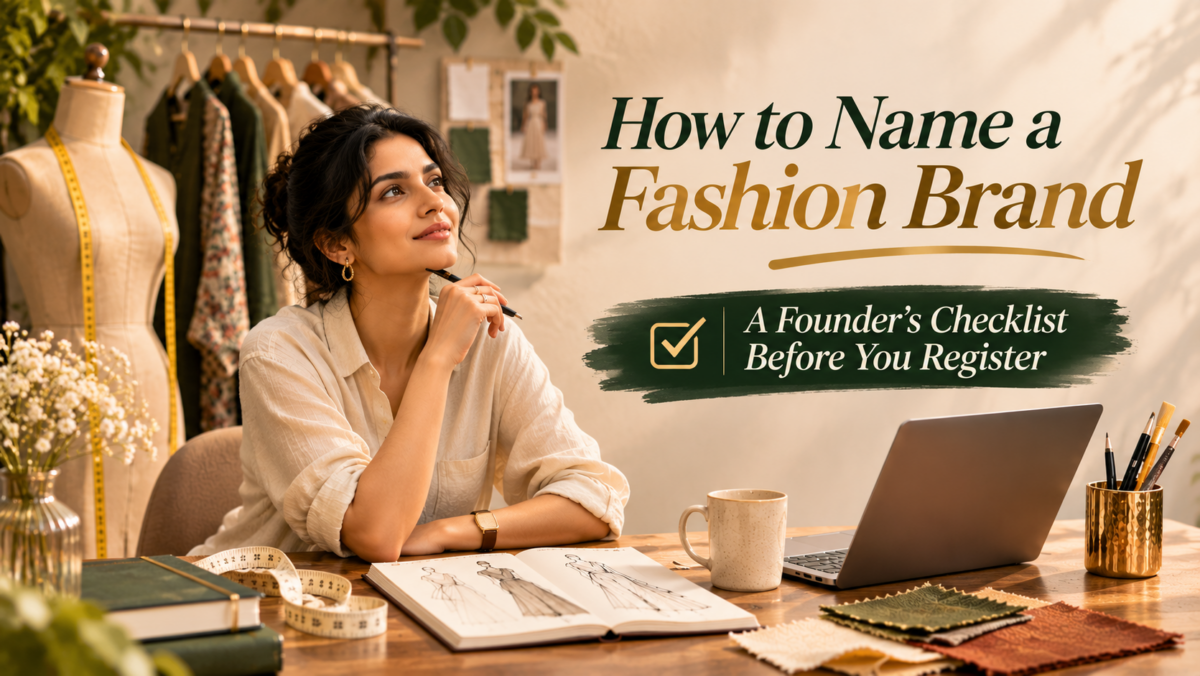
You have a design sketched, a fabric shortlisted and a name you already love. Good. Now pause before a single label gets printed.
A brand name is the one decision in a fashion startup that is cheap to make and painfully expensive to undo. Change a product and hardly anyone notices. Change the name after your first sales, and you rebuild the website, the handles, the packaging, the marketplace listings and some of the trust you worked to earn.
This checklist is for founders who are still at the naming stage. Work through it before you register a company, order labels or buy a domain. (If you are even earlier than that, our complete guide to launching a fashion brand covers the whole journey.)
Why the name matters more than it looks
Your name is the first thing a customer, a buyer or an investor hears about you. It turns up in search results, on invoices, on a hangtag and in a forwarded WhatsApp message from someone who has never seen your product.
Fashion also runs on word of mouth. A name people can say, spell and remember gets recommended more often. A name they stumble over quietly drops out of the conversation.
Start with a three-line brief
Before you brainstorm, answer three questions in one line each:
- Who is it for? A wedding-guest wardrobe and a college student’s weekend wear need very different names.
- What should it feel like? Heritage, playful, minimal, bold? Pick one feeling, not four.
- Where will it be sold? Your own website first, marketplaces, multi-brand stores, or all three? The name has to work on a small phone screen and on a shop shelf.
Keep this brief somewhere you can see it. Every name on your shortlist has to fit it.
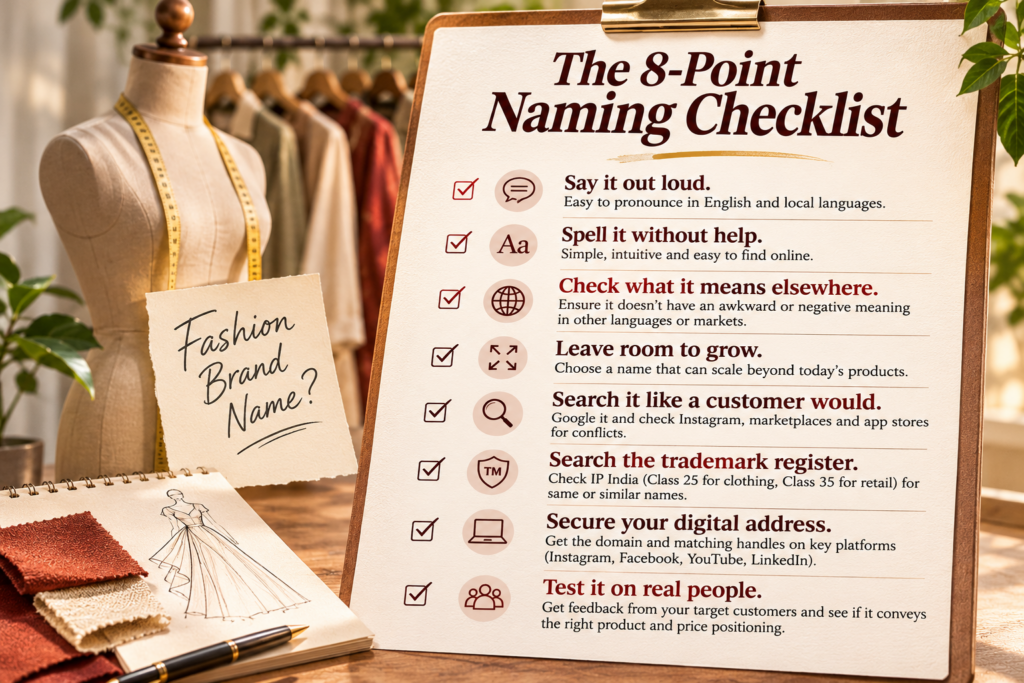
The 8-point naming checklist
Take your top three to five names and run each one through these checks. Drop any name that fails more than one. A name that fails check 6 goes straight off the list.
- Say it out loud. Can a customer pronounce it on the first try? Try it in English and in the regional languages your customers speak. Then do the phone test: say it over a call and ask the other person to type it.
- Spell it without help. If you have to say “that’s with a K and a double L”, you will lose searches and recommendations. Creative spelling works only when people can still find you by typing the name the way they hear it.
- Check what it means elsewhere. A pleasant word in one language can sound awkward, or worse, in another. Ask native speakers of the languages you sell in, and of any market you may export to later.
- Leave room to grow. A name that describes only today’s product can box you in. A label called “Kurta Co.” has a harder time when it adds dresses, co-ords and accessories. A name that suggests a feeling, a place or a story stretches further. (We look at that moment in when and how D2C fashion brands should diversify.)
- Search it like a customer would. Google the name, then check Instagram, marketplaces and app stores. If the first page is full of another fashion brand, a near-identical name or something unrelated and louder, you will fight for attention from day one.
- Search the trademark register. In India, trademarks are registered with the Registrar of Trade Marks (IP India), and its public search tool is open to everyone. Clothing sits in Class 25 of the classification, and if you plan to run your own online store, retail services under Class 35 may matter too. Search for look-alike and sound-alike names, not just identical ones. A name that is close to an existing mark in the same class can be refused or challenged later. Do this before you spend on branding, and speak to a trademark attorney before you file. This is general guidance, not legal advice.
- Secure your digital address. Check the domain (.com and .in if you can), then the Instagram handle, plus Facebook, YouTube and LinkedIn. Aim for the same name everywhere. If the exact name is taken, adding underscores or numbers rarely ends well. Choose a different name instead.
- Test it on real people. Show your shortlist to ten people from your target customer group, not just friends who will be polite. Ask what they think the brand sells and which price range it sits in. If their answers do not match your brief, rethink.
Mistakes we see often
- Falling in love before checking. Once the logo is drawn, nobody wants to drop the name. Run the checks first and design later.
- Assuming a company registration protects the brand. Registering a company name is not the same as registering a trademark. They are separate, and only a trademark gives you rights over the brand name.
- Chasing trends. A trendy word can date quickly. A name that still sounds right in five years is worth more than one that sounds clever this season.
- Sitting too close to a famous label. It may draw attention at first, but it invites objections and confuses customers.
- Inventing a word nobody can find. A coined word can make a strong name, but it starts with zero search presence and needs a plan to be remembered.
A quick illustration
Picture a founder planning a line of handloom-inspired kurta sets. She shortlists five names and falls for one. Then she runs the checks.
Friends can say the name easily, but when she asks five of them to type it after hearing it once, three spell it differently. A search turns up a home décor brand with almost the same spelling, and the .com is already taken. A trademark search shows a similar mark in the clothing class.
It feels slow and disappointing. But two weeks of checking beats rebuilding a launched brand. She moves to her second favourite, which passes all eight checks, and launches with a name she never has to defend. (This is an illustrative example, not a real case.)
A 10-day plan you can follow
- Days 1 and 2: write your three-line brief and a shortlist of five names.
- Days 3 and 4: run checks 1 to 5 and cut the list to three.
- Days 5 to 7: search the trademark register, then check the domain and handles.
- Days 8 to 10: test with ten people from your target customer group, then decide.
Once you have decided, secure the domain and handles right away, and talk to a trademark attorney about filing.
Final thoughts
A good name will not rescue a weak product, but a weak name makes everything else harder. The founders who get this right treat naming as a business decision, not a creative mood.
At Dariaan, we work with early-stage fashion, retail and lifestyle founders from idea to launch. Our 120 Days Launchpad covers brand building end to end, including naming, storytelling, a brand book, pricing analysis and launch-ready range planning. If you are stuck between two names, or want a second pair of eyes before you register, request a call back and we will talk it through.
Also read: Why Most Fashion Startups Fail: 7 Mistakes You Can Avoid