The First 120 Days: What Really Happens Between Idea and Launch
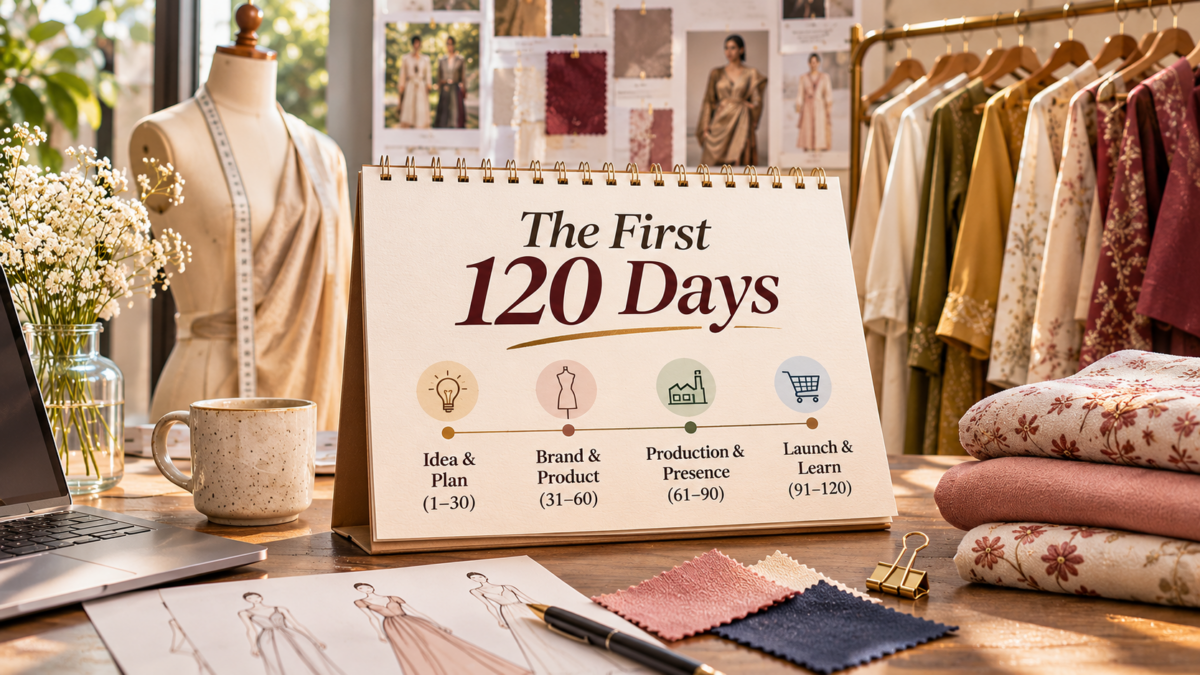
“How long will it take me to launch?” It is the first question almost every new fashion founder asks. The honest answer is about four months if you stay focused. The more useful answer is what actually happens in those four months, because it rarely follows the plan.
So here is the story of an imaginary founder. She is a composite, not a real person, and her story is illustrative. But the stages, the surprises and the lessons will feel familiar to anyone who has tried to start a label in India.
Days 1 to 30: from idea to a plan
She starts the way most founders do: with a notebook full of designs and a head full of ideas. In week one she tries to do everything at once. She looks at fabrics, thinks about logos and browses websites for her store.
Then a friend asks two simple questions. Who exactly is this for? What will she charge? She cannot answer either clearly.
That is the turning point of month one. She talks to about ten women who fit her imagined customer, and learns what they currently wear, where they shop and what they pay. She studies a handful of brands those customers already buy from, looking at their prices, their photos and the way they talk. By day 30 she has a one-page plan with her customer, her price range, her first sales channel and her budget.
The lesson: month one is for decisions, not designs. Settle your customer, price band, first channel and budget before you spend on anything else.
Days 31 to 60: from plan to product and brand
Now the creative work begins. She finalises her name and logo, writes a short brand book and chooses eight styles for her first range. She prepares tech packs and sends them for sampling.
The first samples come back, and several fit badly. A sleeve is too tight, a hem sits wrong, and one fabric feels different from the swatch. A second round of samples is needed, which adds weeks she had not planned for.
The lesson: sampling is where timelines slip. Plan for at least two rounds, and add a buffer to your launch date from the start.
Days 61 to 90: from samples to production and presence
With the samples approved, production starts. But she does not wait for stock to arrive to build her presence. Over these weeks she sets up her website and her Instagram profile, writes her product descriptions, plans her photoshoot and prepares a few weeks of posts.
Production runs about two weeks late. It is stressful, but because her website and content are ready, she can move her launch by a fortnight without losing momentum. Her early followers see behind-the-scenes posts in the meantime.
The lesson: build your audience while the stock is being made. A late factory is a problem. A late factory and an empty page is a crisis.
Days 91 to 120: from stock to first orders
She starts with a soft launch for people who have followed her journey, then opens to everyone. She also begins reaching out to online marketplaces and a few retail partners with a short pitch.
The first orders arrive, and so do the first surprises. Customers ask about sizing. One product page is missing a care instruction. A courier delay makes a delivery late. She fixes each one within a day, and updates her size chart and her page templates.
The lesson: the launch is not the finish line. It is the first day of learning what customers actually need.
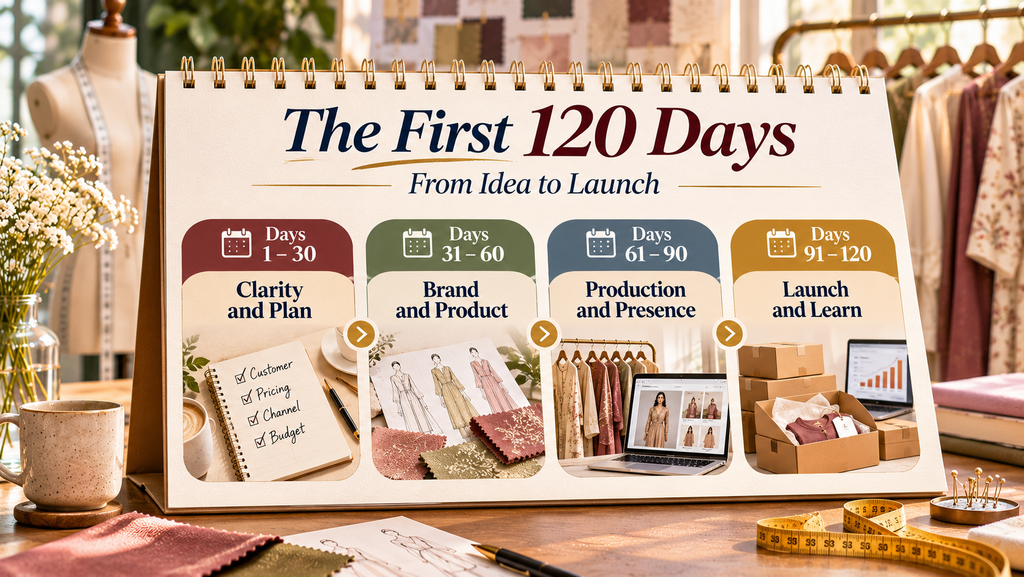
The 120 days at a glance
| Days | Focus | Done when |
| 1 to 30 | Clarity and plan | You have a customer, price band, first channel and budget on one page. |
| 31 to 60 | Brand and product | Name, brand book and range are final, and samples are approved. |
| 61 to 90 | Production and presence | Stock is in production, and your website and content are ready. |
| 91 to 120 | Launch and learn | First orders are delivered, and fixes from them are made. |
What slips most often
- Samples. Rarely right the first time.
- Production. Often later than promised, so keep a buffer.
- Decisions. Every week spent undecided on price, name or range pushes everything behind it.
- Marketing budget. Many founders spend it all on stock and have nothing left to tell people about it.
- Perfectionism. A good launch next week beats a perfect launch next quarter.
What to do this week
- Write your customer, price band, first channel and budget on one page.
- Talk to ten people who fit your customer and listen more than you speak.
- Choose a launch date four months away and work back from it, leaving a buffer for samples and production.
Final thoughts
The first 120 days are not about doing everything. They are about doing the right things in the right order, and not getting stuck on any one of them. If you are weighing up the bigger picture, our complete guide to launching a fashion brand and our piece on why most fashion startups fail make good companions.
This stretch, from idea to launch, is exactly what our 120 Days Launchpad is built for. It is for founders from the idea stage to pre-revenue, and it covers e-commerce website and social media setup, SEO and online reputation, a brand book, competitor mapping, pricing analysis, launch-ready range planning, marketplace outreach and a business plan with an execution roadmap. You come out with a launch-ready brand and channels.
If you are about to start, or you are stuck somewhere in the middle, request a call back and tell us where you are. We will help you work out what comes next.